

Mini-Course 1: High-Dimensional Probability and Statistical Mechanics
Lecturer: Nam Kyeongsik, Korea Advanced Institute of Science and Technology (KAIST)

Kyeongsik Nam is an Associate Professor in the Department of Mathematical Sciences at KAIST. He received his B.S. in Mathematics from Seoul National University in 2015 and his Ph.D. in Mathematics from the University of California, Berkeley in 2020. He was a Hedrick Assistant Adjunct Professor at UCLA before joining KAIST in 2021. His research interests lie broadly in probability theory, with particular emphasis on statistical mechanics, random matrices and random graphs, stochastic processes, and stochastic PDE. He received the Sangsan Young Mathematician Award from the Korean Mathematical Society in 2024, and his research has been supported by a Samsung Science & Technology Foundation Grant since 2022.
Title and abstract:
Title: High-Dimensional Probability and Statistical Mechanics
Abstract: High-dimensional probability provides powerful tools for understanding complex random systems. In this mini-course, we will introduce its basic ideas, with particular emphasis on their connections to statistical mechanics. We will begin with concentration of measure phenomenon for independent systems. We will then turn to interacting systems and introduce Gibbs measures. Throughout the course, the emphasis will be on general probabilistic principles that recur across high-dimensional probability, statistical mechanics, random matrices, and related areas.
Mini-Course 2: Learning under distribution shift: from domain adaptation to in-context learning
Lecturer: Ha Wooseok, Korea Advanced Institute of Science and Technology (KAIST)

Wooseok Ha is an Assistant Professor in the Department of Mathematical Sciences at KAIST. He received his Ph.D. in Statistics from the University of Chicago. His research lies at the intersection of statistics and machine learning with a focus on high-dimensional statistics, causal domain adaptation, and the statistical foundations of AI. He is also interested in applications of statistical and machine learning methods to scientific and engineering problems. Prior to joining KAIST, he was a postdoctoral fellow at the Foundations of Data Analysis (FODA) Institute and the Berkeley Institute for Data Science (BIDS), and a Neyman Visiting Assistant Professor in the Department of Statistics at UC Berkeley. He subsequently worked as an Applied Scientist at AWS AI Labs, where he developed methods and systems based on large language models and contributed to the development of Amazon Q. His work has appeared in various leading venues in statistics and machine learning.
Website: https://haywse.github.io/
Abstract:
This mini-course introduces the mathematical foundations of learning under distribution shift, where training and test data may follow different distributions. We will formulate classical shift settings and discuss importance weighting, domain adaptation, and their theoretical guarantees. We will then introduce in-context learning as a modern form of adaptation and examine its connections with classical statistical learning.
Mini-Course 3: Elliptic Curves: A Very Short Arithmetic Tour
Lecturer: Kim Wansu, Korea Advanced Institute of Science and Technology (KAIST)
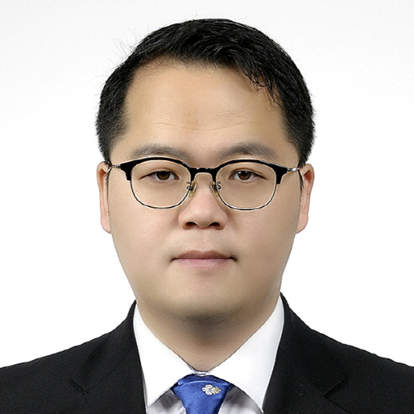
Wansu Kim received his PhD in mathematics from the University of Michigan, Ann Arbor in 2009, with a thesis written under the direction of Brian Conrad. His research focuses on Shimura varieties and their local and function field analogues, with particular motivation coming from the Langlands programme. He also works on equivariant refinements of the Birch–Swinnerton-Dyer conjecture over global function fields.
Abstract:
Elliptic curves have been among the superstars of modern number theory. Over the past century, their arithmetic has become deeply intertwined with some of the most beautiful ideas in mathematics, including L-functions, modular forms, Fermat’s Last Theorem, and the Birch–Swinnerton-Dyer conjecture.
In this minicourse, I will make an admittedly overambitious attempt to give a brief tour of this story. Starting from some basic questions about rational points on elliptic curves, we will meet a selection of key results and conjectures, and try to get a glimpse of why elliptic curves occupy such a central place in modern number theory.